


Part 1: Assessment & Formulation – 15 & 16 April 2026
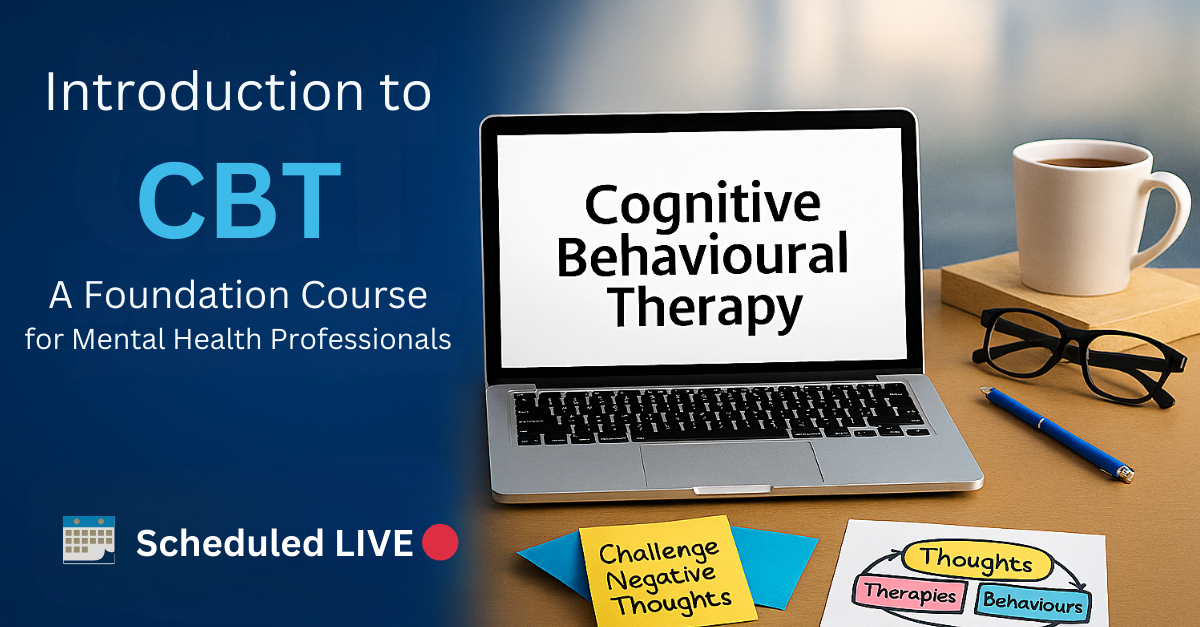
This workshop will give participants a grounding in the fundamental skills of using CBT. The workshop incorporates a brief introduction to basic CBT theory, but the main aim is to teach participants the CBT skills of assessing clients and producing CBT formulations, or case conceptualisations, of their problems. The workshop is focused on practical clinical skills, and therefore the bulk of the work involves role-playing. The workshop leaders will role-play clients and workshop participants in small groups will follow through the different stages of assessment, finally producing a CBT formulation for the ‘client’.
Part 2: Basic Therapeutic Skills – 05 & 06 May 2026
This workshop builds on the Assessment and Formulation workshop and provides an introduction to some of the basic strategies used in CBT. These include agenda setting, identifying and testing negative thoughts, using guided discovery (“Socratic questioning”), goal setting, and the use of behavioural experiments. As with Part 1, the workshop involves extensive role-playing, in order to give participants hands-on experience and feedback of clinical strategies.
Part 3: Working with Depression – 03 & 04 June 2026
The aim of this workshop is to develop and refine some of the basic skills learned in Parts 1 and 2 and integrate them in the context of working with clients with depression. Particular issues addressed will include engendering hope, countering withdrawal and inactivity, and dealing with negative automatic thoughts and suicidal ideation. The workshop will provide plenty of opportunity to practise therapy skills derived from the cognitive model of depression.
Part 4: Working with Common Problems – 29 & 30 June 2026
Day 1: Panic (am); Health Anxiety (pm)
Day 2: OCD (am); Social Anxiety (pm)
These workshops build on Parts 1 & 2 and aim to give participants an introduction to specific models and ways of working with some problems commonly encountered in clinical practice. The workshops will be skills based and give participants opportunities to practice techniques relevant to the specific problems.
These workshops are suitable for mental health professionals from any discipline who want a basic introduction to CBT skills. They have been successfully run around the country for nurses, doctors, trainee psychologists, occupational therapists, social workers and counsellors.
The workshops build on each other, and this means that you will only be accepted for Part 2 if you have attended Part 1, and you will only be accepted for Parts 3 and/or 4 if you have attended Parts 1 & 2. You can attend either or both days of Part 4.


There are no reviews yet.