


Obsessive Compulsive Disorder (OCD) remains one of the most common mental health disorders and can result in significant impairment. Accessing effective CBT can be life changing for individuals with OCD. Key principles of CBT are fundamental in providing successful treatment including collaboration, individualised formulation, and active behavioural work.
This workshop will provide a cognitive behavioural framework for understanding and conceptualising OCD based on the Salkovskis model (Salkovskis, 1985, 1989).
Interactive exercises and experiential learning will be used in the workshops.
Participants will gain knowledge of:
- The cognitive model of OCD applied to less common presentations
Participants will gain skills in:
- Identifying and formulating when there are difficulties making progress
- Recognising different variants of OCD including rumination-based OCD, religious OCD, OCD characterised by doubts about relationships and / or sexual identity
- Formulating complex presentations of OCD including co-morbid trauma
- Engaging with people experiencing OCD and building a sound therapeutic relationship
- Normalising the presence of intrusive thoughts
- Accessing the meaning attached to the intrusive thoughts – identifying the threat appraisal
- Collaboratively deriving a specific OCD formulation that forms a shared understanding between the person with OCD and the therapist
- Developing a Theory A / Theory B – an alternative, less threatening belief
- How to use metaphor effectively
- Planning for the end of treatment and how to maintain and extend progress
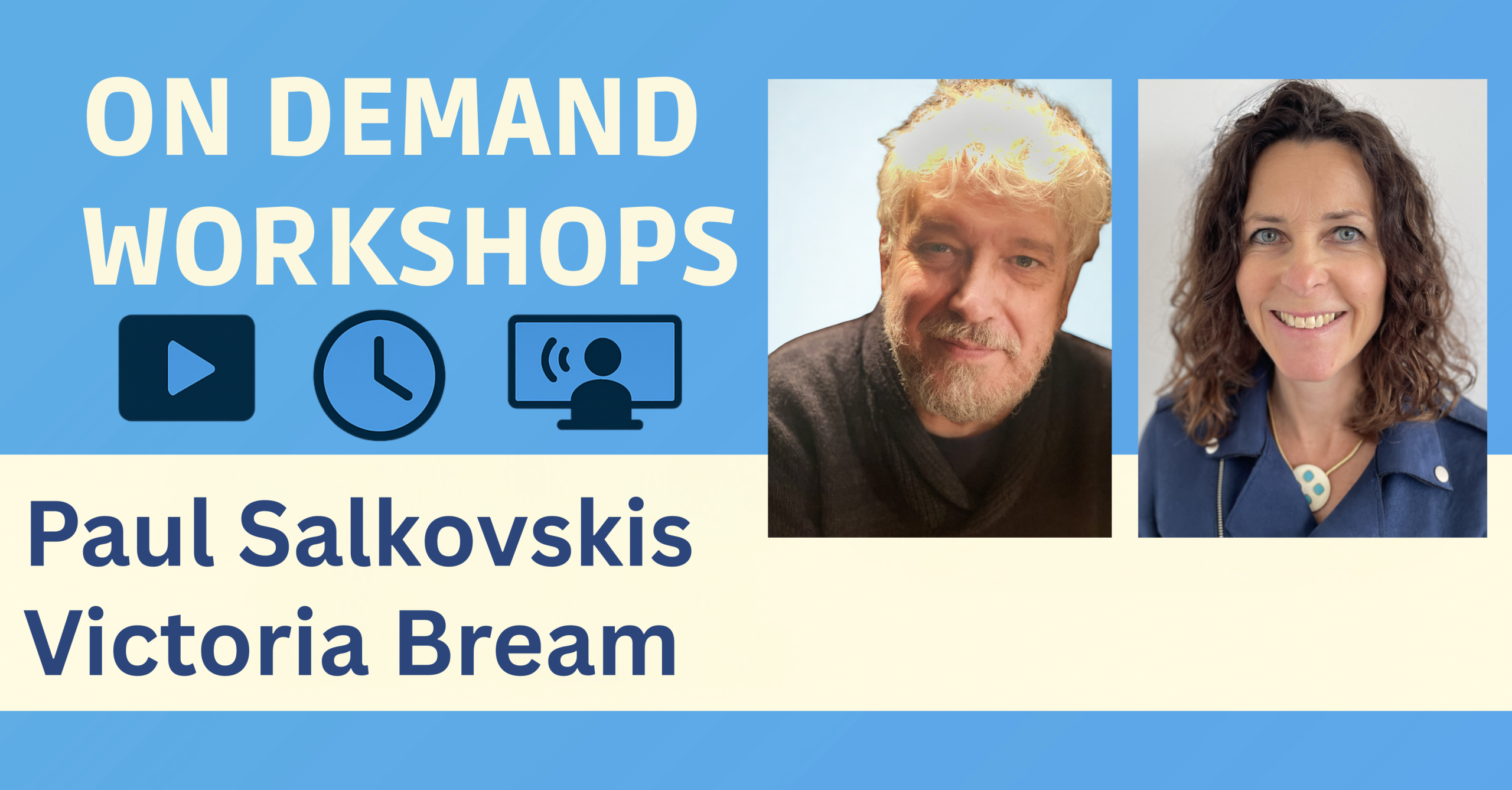
This workshop will be presented by Victoria Bream and/or Paul Salkovskis.
References:
Cabedo, E., Carrió, C., & Belloch, A. (2018). Stability of treatment gains 10 years after cognitive behavioral therapy for obsessive-compulsive disorder: A study in routine clinical practice. International Journal of Cognitive Therapy, 11(1), 44-57.
Bream, V., Challacombe, F., Palmer, A., & Salkovskis, P. (2017). Cognitive behaviour therapy for obsessive-compulsive disorder. Oxford University Press.
Salkovskis, P. M. (1985). Obsessional-compulsive problems: A cognitive-behavioural analysis. Behaviour research and therapy, 23(5), 571-583.
Salkovskis, P. M. (1999). Understanding and treating obsessive—compulsive disorder. Behaviour research and therapy, 37, S29-S52.
Sookman, D., Phillips, K. A., Anholt, G. E., Bhar, S., Bream, V., Challacombe, F. L., … & Veale, D. (2021). Knowledge and competency standards for specialized cognitive behavior therapy for adult obsessive-compulsive disorder: phase two series by the International Accreditation Task Force of The Canadian Institute for Obsessive Compulsive Disorders (CIOCD, www. ciocd. ca). Psychiatry Research, 113752.

There are no reviews yet.